
 Home
The Legal Reality: Does Japan Extradite Fugitives to the US?

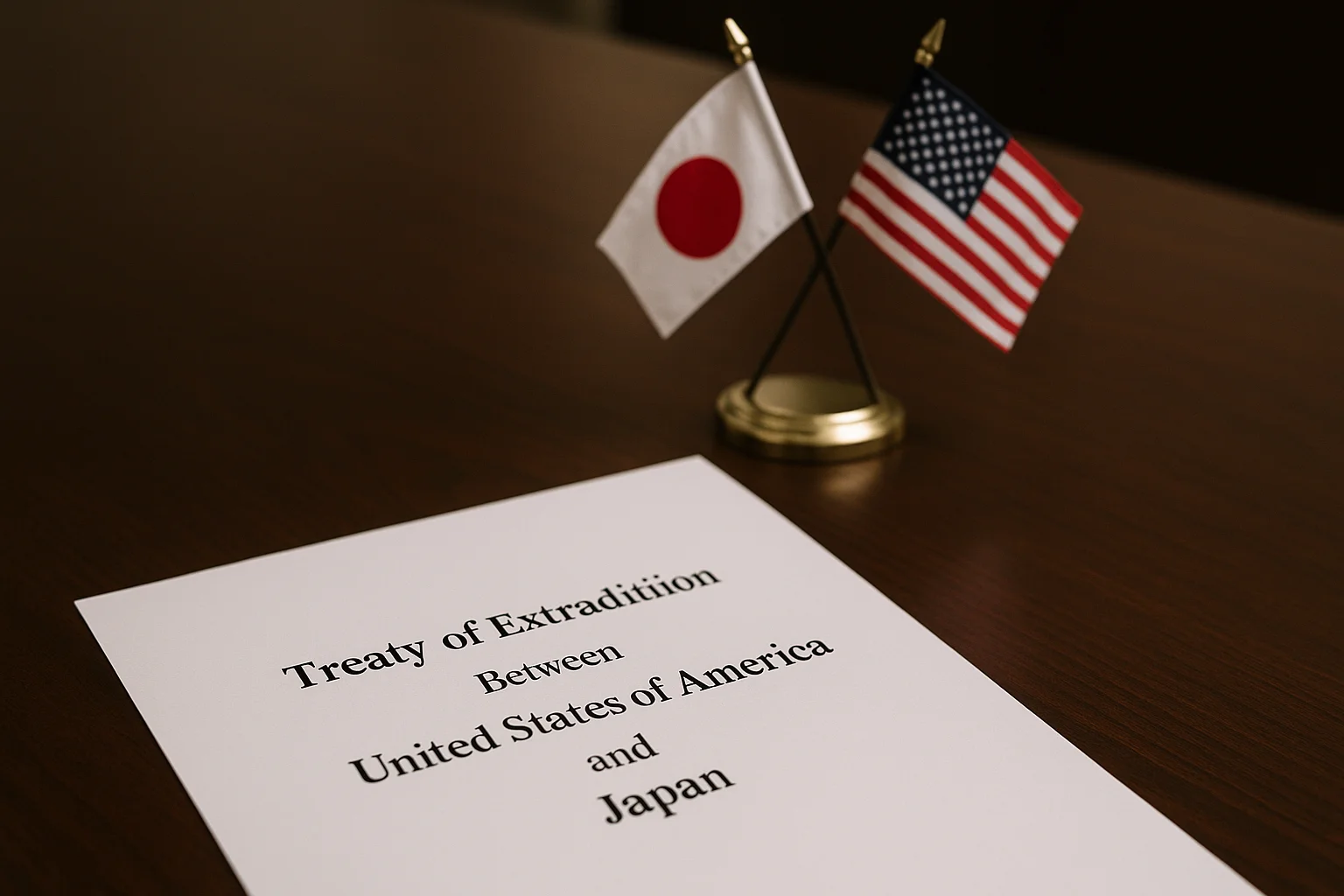
Yes, Japan does extradite to the United States — but not automatically. Under the Treaty on Extradition between Japan and the United States, signed in 1978 and in force since 1980, extradition requires dual criminality, review by the Tokyo High Court, and a final decision by Japan’s Minister of Justice. Japan isn’t a non-extradition country; it’s simply selective, maintaining formal treaties with only two nations — the US and South Korea.

Japan does extradite individuals to the United States. But it’s not automatic. Not by a long shot. The entire process hinges on a formal legal agreement, the Treaty on Extradition between Japan and the United States of America, signed at Tokyo on March 3, 1978, and in force since March 26, 1980. Extradition requires meeting specific conditions — like the alleged crime being illegal in both countries — and surviving a formal review by Japanese courts and a final, political decision by the Minister of Justice. The full treaty text is on file with the U.S. Congress as Treaty Document 96-16.
Extradition is the formal legal process by which one country surrenders a person found within its territory to another country where that person is sought for prosecution or to serve a sentence for a criminal offense. This cooperation is typically based on a bilateral treaty.
Dual Criminality is a core principle in extradition law which requires that the conduct for which a person is sought must be considered a criminal offense under the laws of both the requesting country (the US) and the requested country (Japan).
Is Japan a Non-Extradition Country? Does Tokyo Have Extradition?
No, Japan is not a non-extradition country, and there’s no separate rule for Tokyo — Japan extradition laws are national, applied uniformly whether the fugitive is found in Tokyo, Osaka, or anywhere else. Japan does have an extradition treaty with the US and does hand over both foreign nationals and, in rare cases, its own citizens. What makes Japan unusual isn’t a lack of cooperation; it’s the opposite — Japan maintains formal extradition treaties with only two countries in the world, the United States and South Korea. Requests from any other country are handled case-by-case under Japan’s domestic Act of Extradition and the principle of reciprocity, which is a slower and far less certain path than the treaty route.
What is the Legal Basis for Extradition Between Japan and the US?
The legal framework for extradition between Japan and the United States rests on both international agreement and domestic law, but the treaty is king.
The 1978 Bilateral Treaty: The primary legal document is the Treaty on Extradition between Japan and the United States of America. Signed in 1978 and effective since 1980, this treaty creates a binding obligation for both nations to surrender individuals sought for extraditable offenses. It details the covered crimes and the exact procedures for requests. It’s also one of only two such treaties Japan maintains — the other is with the Republic of Korea.
Japan’s Domestic Law: Japan’s Act of Extradition (Law No. 68 of 1953) lays out the internal steps for handling requests from any country, defining the roles of the Ministry of Justice, prosecutors, and the courts. Here’s a critical point: when a treaty exists, like the one with the U.S., its rules always override conflicting provisions in this domestic Act.
Principle of Reciprocity: In theory, Japan’s domestic law allows for extradition without a treaty, based on a guarantee of reciprocity. This would mean Japan could agree to a surrender if the other country promised to do the same for Japan in the future. But with the strong US-Japan treaty in place, this principle is irrelevant for US cases.
What Conditions Must Be Met for Extradition to Occur?
For a US extradition request to succeed in Japan, several key treaty conditions must be met. A failure on any one of these points can doom the entire request.
Dual Criminality: The offense must be a crime in both the United States and Japan. You can’t be extradited for an act that’s legal in Japan, no matter how serious it is in the US. This ensures Japan only surrenders people for conduct both nations agree is criminal.
Minimum Sentence Threshold: The crime must be punishable in both countries by death, life imprisonment, or deprivation of liberty for a period of more than one year. This threshold is important — it reserves the complex, expensive process of international extradition for serious criminal matters, not minor infractions.
Exclusions and Grounds for Refusal: The treaty specifies several situations where extradition will or may be refused. It’s absolutely prohibited for purely political offenses, and also barred if the person has already been prosecuted, tried, or acquitted by the requested party for the same offense. More importantly, Article V of the treaty allows both countries to refuse to extradite their own nationals. While Japan can legally refuse to surrender its citizens, this is a discretionary power, not an automatic bar. The Minister of Justice decides on a case-by-case basis, often making it a point of intense diplomatic focus.
How Does the Extradition Process from Japan to the US Work?
The path to extradition from Japan is a formal, multi-stage procedure that weaves through both the judicial and executive branches of the Japanese government.
Formal Request Submission: It all starts when the U.S. Department of Justice, via the Department of State, submits a formal extradition request to Japan’s Ministry of Foreign Affairs. This isn’t a simple form. The packet must contain enough evidence to establish probable cause that the person committed the crime.
Japanese Legal Review: From there, the request goes to Japan’s Ministry of Justice. Public prosecutors scrutinize it, checking for compliance with every treaty requirement — dual criminality, statutes of limitations, and the absence of any bars like the political offense exception.
Judicial Examination by the Tokyo High Court: If the request passes the ministry’s review, the case moves to the Tokyo High Court. The court doesn’t decide guilt or innocence. Its job is narrow: to determine if the legal conditions for extradition under the treaty and local law have been met. The individual sought has the right to legal representation and can fight the request here.
Final Decision by the Minister of Justice: Even if the High Court approves the extradition, the fight isn’t over. The ultimate decision to surrender the person rests with Japan’s Minister of Justice, who holds final executive authority. This final step is political, not just legal. If the Minister approves, the request is certified for extradition and arrangements are made to transfer the individual to US custody.

Japan-US Extradition Timeline: A General Overview
| Stage | Description | Approximate Duration |
|---|---|---|
| Arrest & Provisional Detention | Arrest based on a U.S. warrant and provisional request. Detention is possible while the formal request is prepared. | Up to 23 days (initial pre-indictment detention) |
| Formal Request & Review | The U.S. submits the formal request. Japan’s Ministry of Justice reviews it for compliance. | Weeks to months |
| Judicial Phase | The case is heard by the Tokyo High Court to determine if legal requirements are met. | Several months, depending on complexity |
| Ministerial Decision | The Minister of Justice makes the final political decision to grant or refuse surrender. | Weeks to months after court approval |
| Takeaway: The entire process is not swift; it often takes many months and can extend beyond a year in complex or contested cases. |
A Recent Test Case: Extradition Runs Both Ways
The treaty isn’t a one-way street, and a 2026 case shows exactly how the reverse direction — the US surrendering someone to Japan — plays out. In March 2026, U.S. authorities extradited Dr. Masahide Kanayama, a Japanese national and long-time New York physician, to Japan to face charges over a string of temple and shrine vandalism incidents from 2015. Kanayama fought the extradition through the Southern District of New York, the Second Circuit, and ultimately an emergency application to the U.S. Supreme Court, arguing that the underlying conduct wouldn’t meet the treaty’s dual criminality standard and raising humanitarian and religious-persecution concerns. Every one of those challenges was ultimately rejected, and he was extradited. The Kanayama case is a useful reminder that the same demanding legal process — dual criminality review, appeals through multiple courts, and a final executive-level decision — applies in both directions under this treaty, not just when the US is the one requesting.

What are the Consequences of a Refused Extradition Request?
If Japan refuses an extradition request from the United States, the person cannot be forcibly removed from Japan to face charges in the US. They remain under Japanese jurisdiction. What happens next depends entirely on the reason for the refusal.
If the rejection was due to a technical error in the paperwork, the US might be able to fix it and submit a new request. But if the refusal came from a fundamental bar — like the political offense exception or a final court ruling that treaty conditions were not met — the case is effectively dead in the water.
There’s a major exception for Japanese nationals. If Japan refuses extradition based on the “own national” clause, it may then be obligated under the international principle of aut dedere aut judicare (“either extradite or prosecute”) to investigate the individual in Japan for the alleged crime. This principle aims to prevent anyone from escaping justice entirely. In that scenario, the person could still face a full criminal proceeding, just within Japan’s legal system instead of America’s.
How Can a US Extradition Request from Japan Be Challenged?
Challenging an extradition request in Japan means mounting a legal defense in the Tokyo High Court and, potentially, making a case to the Minister of Justice. Key defense strategies include:
- Lack of Dual Criminality: Arguing that the acts described in the US request simply don’t break any Japanese laws, or that the request relies on a stretched or hypothetical reading of the conduct — the exact argument raised (and ultimately rejected) in the Kanayama case.
- Statute of Limitations: Proving that the time limit to prosecute the crime has expired under the applicable law specified in the treaty. Timing arguments are technical and depend on exactly which country’s request and which country’s law the treaty points to.
- Political Offense Exception: Claiming the alleged crime was political in nature, not a common crime. This is a very narrow and difficult argument to win for most criminal charges.
- Human Rights Concerns: Making the case that extradition would violate the person’s fundamental human rights, such as a credible risk of persecution. These arguments are difficult to win on their own, as Kanayama’s case illustrates, but they are routinely raised and considered.
- Mistaken Identity or Insufficient Evidence: Directly challenging the US evidence packet by arguing it fails to meet the “probable cause” standard required by the treaty.
⚠️ Time is critical — every day matters
Get a free case assessment
Our team specialises in cases with an international element. We review applicable treaties, assess risks, and prepare an action plan.
This article is published by an independent law firm for informational purposes only and does not represent or claim affiliation with any government body, international organization, or official authority.
Frequently Asked Questions About Japan Extradition
Does Japan have an extradition treaty with the US?
Yes. The Treaty on Extradition between Japan and the United States of America was signed in 1978 and has been in force since March 1980. It’s one of only two extradition treaties Japan maintains — the other is with South Korea.
Does Japan extradite to the US?
Yes, including its own citizens in rare cases, though Article V of the treaty leaves that decision to Japan’s discretion rather than making it mandatory. Foreign nationals located in Japan and wanted by the US are extradited far more routinely.
Is Japan a non-extradition country?
No. Japan actively extradites under its treaty with the US and its treaty with South Korea, and can extradite to other countries case-by-case under domestic law and reciprocity. What sets Japan apart is having only two formal extradition treaties in total, not an unwillingness to cooperate.
Can I be extradited from Japan?
Yes. A person can be extradited from Japan, especially to countries like the United States with which it has a formal treaty. The process is governed by that treaty’s specific conditions and Japan’s domestic Act of Extradition, and the final decision rests with the Minister of Justice.
How long can Japan hold you in jail?
Japan’s legal system permits pre-indictment detention for a criminal investigation for up to 23 days. During an extradition proceeding, detention can continue while the Tokyo High Court reviews the case and the Minister of Justice makes a decision — a period that can stretch for many months, especially in contested cases like Kanayama’s, which involved multiple rounds of appeal.
Does the US extradite its citizens?
Yes, absolutely. The United States regularly extradites its own citizens. Unlike Japan’s treaty, which grants discretion on this point, U.S. law and most of its treaties make no exception for nationality. A US citizen will be surrendered to face trial abroad if the legal requirements for extradition are met.